
Artificial intelligence is rapidly becoming one of the most influential technologies in modern digital life. While early AI systems were mostly used by large companies or research institutions, recent advancements have made AI tools accessible to individuals around the world.
Today, personal AI tools are helping people perform tasks more efficiently, automate repetitive work, and improve productivity in both personal and professional environments. These tools are available on smartphones, laptops, and cloud platforms, allowing users to access intelligent assistance whenever they need it.
From generating written content and organizing schedules to analyzing data and assisting with creative projects, personal AI tools are changing how people interact with technology.
In this article, we explore the rise of personal AI tools, how they work, and what they mean for everyday users.
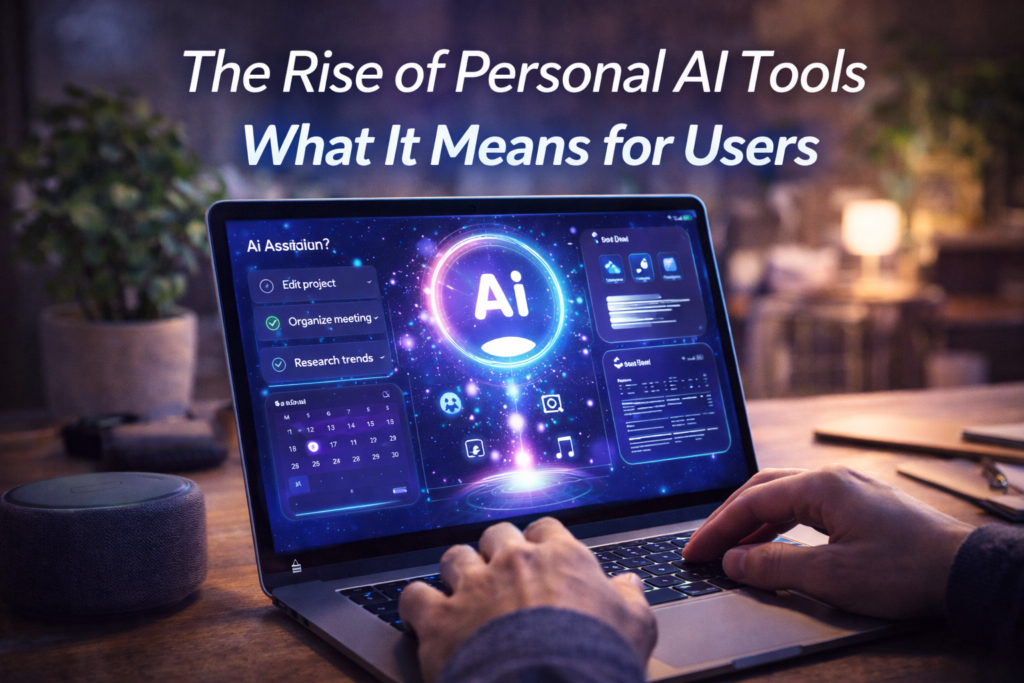
What Are Personal AI Tools?
Personal AI tools are software applications powered by artificial intelligence that help individuals complete tasks, analyze information, and automate workflows.
Unlike traditional software, these tools can learn from user behavior and adapt to individual preferences.
Examples of personal AI tools include:
- Writing assistants
- Digital productivity tools
- AI-powered scheduling assistants
- Image and video generation tools
- AI chatbots for research and information
These tools rely on machine learning models that analyze large datasets and generate intelligent responses based on user input.
As AI technology continues to improve, these tools are becoming more powerful and easier to use.
Why Personal AI Tools Are Growing Rapidly
Several factors have contributed to the rapid growth of personal AI tools.
Increased Computing Power
Modern computers and smartphones are powerful enough to run advanced AI algorithms efficiently. Dedicated AI processors allow devices to handle complex tasks quickly without excessive battery consumption.
Cloud-Based AI Platforms
Cloud computing allows AI models to process large amounts of data and deliver results instantly. Users can access powerful AI tools without needing specialized hardware.
Improved Machine Learning Models
Advancements in machine learning have significantly improved the accuracy and capabilities of AI tools.
These improvements allow AI systems to:
- Understand natural language more effectively
- Generate realistic images and videos
- Analyze complex datasets
- Provide more accurate recommendations
Personal AI Tools for Productivity
One of the most popular uses of AI tools is improving productivity.
Many individuals now use AI-powered applications to manage daily tasks and streamline workflows.
Examples include:
Smart Scheduling Assistants
AI scheduling tools can automatically organize meetings, set reminders, and manage calendars.
Instead of manually coordinating schedules, users can rely on AI assistants to suggest optimal meeting times.
Task Management
AI-powered task managers can prioritize tasks based on deadlines and user preferences.
These tools help individuals stay organized and maintain productivity throughout the day.
Automated Email Responses
Some AI tools can generate draft email responses based on the context of incoming messages.
This feature saves time and reduces the effort required to respond to routine communications.
AI Tools for Content Creation
Another area where personal AI tools are making a significant impact is content creation.
AI can now assist with writing, graphic design, video editing, and other creative tasks.
Writing Assistance
AI writing tools can help users generate ideas, create outlines, and draft articles or messages.
These tools are often used by:
- Bloggers
- Students
- Marketing professionals
- Content creators
AI writing assistants can also improve grammar, clarity, and tone.
AI Image Generation
Image generation tools allow users to create visual content using simple text descriptions.
These tools are particularly useful for:
- Graphic designers
- Social media creators
- Marketing teams
AI-generated visuals can help users create engaging content quickly.
Video Editing Assistance
AI-powered video editing tools can automatically identify highlights, add subtitles, and improve video quality.
These features make video production more accessible to beginners.
AI Tools for Learning and Research
Personal AI tools are also transforming education and research.
Students and professionals can use AI assistants to:
- Summarize long documents
- Generate explanations for complex topics
- Translate languages
- Conduct research more efficiently
AI-powered learning platforms can also adapt to individual learning styles, providing personalized educational experiences.
AI in Everyday Communication
Communication tools are also becoming smarter thanks to AI.
Modern messaging platforms now include features such as:
- Smart reply suggestions
- Automatic translation
- Grammar correction
These features help users communicate more effectively and reduce language barriers.
AI communication tools are particularly useful for global collaboration and remote work environments.
The Benefits of Personal AI Tools
The rise of personal AI tools provides several advantages for users.
Increased Efficiency
AI can automate repetitive tasks, allowing users to focus on more meaningful activities.
Improved Creativity
Creative professionals can use AI tools to generate ideas and experiment with new concepts.
Better Decision-Making
AI tools can analyze large amounts of information quickly, helping users make informed decisions.
Accessibility
AI tools can assist users with disabilities by providing voice control, text-to-speech, and other accessibility features.
Challenges and Concerns
Despite their benefits, personal AI tools also raise important challenges.
Privacy Concerns
Many AI tools rely on analyzing user data to provide personalized experiences.
Users should review privacy policies and settings to ensure their data is handled responsibly.
Accuracy Issues
AI-generated content may occasionally contain errors or inaccuracies.
Users should verify important information before relying on AI-generated results.
Overreliance on Automation
While AI can improve efficiency, relying too heavily on automation may reduce critical thinking or creativity.
Balancing human judgment with AI assistance is important.
The Future of Personal AI Tools
The development of personal AI tools is expected to continue accelerating in the coming years.
Future advancements may include:
- More advanced conversational AI
- Improved creative tools
- AI-powered health monitoring
- Smarter personal assistants
These technologies may eventually integrate seamlessly into everyday devices such as smartphones, smart glasses, and home assistants.
As AI systems become more capable, they will likely become essential tools for managing both personal and professional activities.
Final Thoughts
Personal AI tools are transforming how individuals interact with technology. By automating tasks, enhancing creativity, and improving productivity, these tools are becoming valuable assistants in daily life.
As artificial intelligence continues to evolve, users will have access to even more powerful tools that help simplify complex tasks and improve efficiency.
Understanding how to use personal AI tools effectively can help individuals take full advantage of the opportunities offered by modern technology.
The rise of personal AI tools represents an important step toward a future where intelligent digital assistants support people in many aspects of their lives.
SHARING IS CARING 💖