
For many years, connecting devices to computers required a variety of cables and ports. Different connectors were needed for charging phones, transferring data, connecting accessories, and linking devices to displays. This lack of standardization created confusion and inconvenience for users.
USB-C has changed the way people connect and power their devices. Designed as a universal connector, USB-C simplifies charging, data transfer, and device connectivity across multiple platforms.
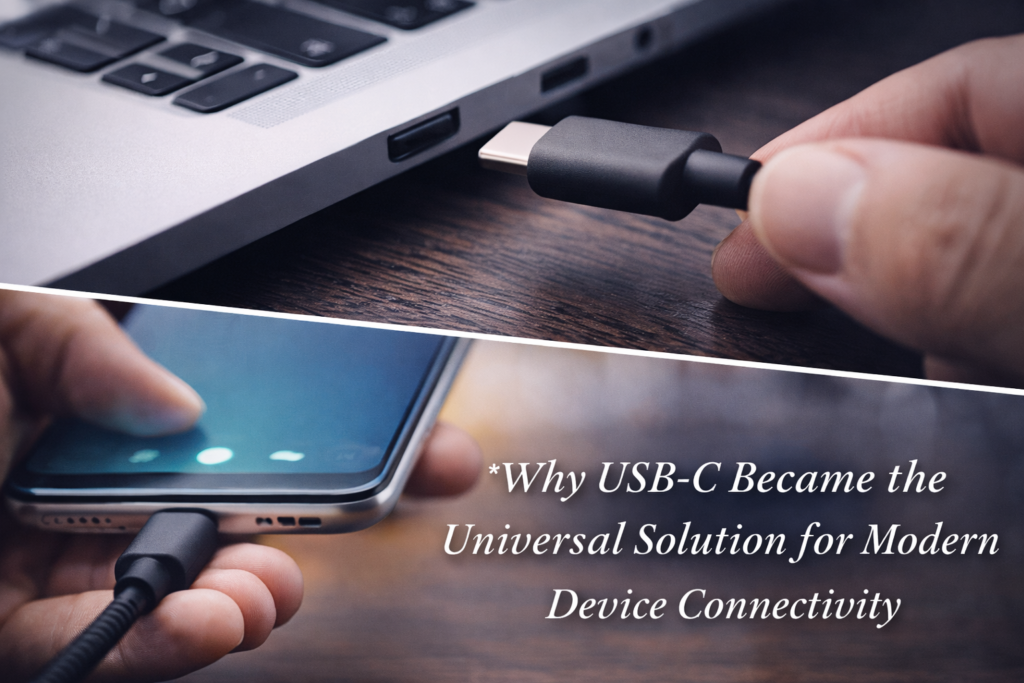
Today, USB-C ports appear on smartphones, laptops, tablets, gaming consoles, and many other electronic devices. This widespread adoption reflects the growing need for a single connector that can handle multiple tasks efficiently.
In this article, we explore how USB-C solved many of the problems associated with earlier USB connectors, why it has become the preferred standard, and how it continues to shape modern technology.
The Early Problems With USB Connectors
Before USB-C became popular, many devices used different types of USB connectors. Each connector type served specific purposes but created several challenges for users.
Multiple Connector Types
Common connectors included:
- USB-A
- USB-B
- Mini-USB
- Micro-USB
Each device often required a specific cable, making it difficult to maintain compatibility across products.
Users frequently needed several cables for different devices, which could be inconvenient when traveling or managing multiple electronics.
One-Way Plug Design
Older USB connectors only worked in one orientation. If users inserted the cable incorrectly, it would not fit.
This small issue caused daily frustration, especially when connecting devices in low-light environments.
Many people remember repeatedly flipping USB connectors until they finally fit into the port.
Limited Power Capabilities
Earlier USB standards were designed primarily for data transfer rather than high-power charging.
This meant devices often required separate charging adapters or proprietary cables.
As smartphones, laptops, and tablets became more powerful, these limitations became increasingly problematic.
The Introduction of USB-C
USB-C was introduced as part of a new generation of USB technology designed to address the limitations of earlier connectors.
The goal was to create a single universal connector capable of handling power, data transfer, and video output.
Unlike previous USB connectors, USB-C was built with flexibility and scalability in mind.
Today, USB-C is supported by major technology companies and has become the primary connection standard for many devices.
Key Advantages of USB-C
USB-C provides several important improvements compared to earlier USB connectors.
Reversible Connector Design
One of the most noticeable features of USB-C is its reversible design.
The connector can be inserted in either orientation, eliminating the frustration associated with older USB plugs.
This small design improvement greatly enhances user convenience.
Faster Data Transfer
USB-C supports modern USB standards that enable extremely fast data transfer speeds.
Depending on the version used, USB-C can support speeds of up to 40 gigabits per second with technologies like Thunderbolt.
These speeds allow users to transfer large files, high-resolution videos, and other data quickly.
Higher Power Delivery
USB-C supports a technology called USB Power Delivery, which allows devices to receive significantly more power than earlier USB connectors.
This means USB-C can charge not only smartphones but also:
- Laptops
- Tablets
- Gaming devices
- Portable monitors
Many modern laptops now use USB-C for both charging and data transfer.
Video Output Capability
USB-C also supports video output, allowing users to connect devices directly to external displays.
With the right adapters or cables, USB-C can support:
- HDMI connections
- DisplayPort connections
- External monitors
This makes USB-C a powerful tool for productivity and entertainment.
How USB-C Simplifies Device Connectivity
One of the biggest advantages of USB-C is its ability to replace multiple connectors with a single universal standard.
Instead of carrying separate cables for different devices, users can often rely on a single USB-C cable.
This simplifies everyday tasks such as:
- Charging devices
- Connecting storage drives
- Linking smartphones to computers
- Connecting laptops to displays
For travelers and professionals, this reduced cable clutter is a major benefit.
USB-C and the Future of Charging
USB-C has also played a major role in shaping the future of charging technology.
Many companies now use USB-C as their primary charging standard.
This shift has been driven by several factors, including:
- Faster charging speeds
- Standardized power delivery
- Improved compatibility between devices
Some regions have also introduced regulations encouraging the adoption of universal charging standards to reduce electronic waste.
By using the same charger for multiple devices, consumers can reduce the number of cables and adapters they need.
The Role of USB-C in Modern Laptops
Modern laptops increasingly rely on USB-C ports for multiple functions.
In many cases, a single USB-C port can handle:
- Charging
- Data transfer
- External display connections
- Peripheral devices
Some laptops now feature USB-C docking stations that allow users to connect several accessories using one cable.
This streamlined approach improves productivity and simplifies workspace organization.
USB-C in Smartphones and Tablets
Smartphones and tablets have also embraced USB-C technology.
Compared to earlier connectors such as Micro-USB, USB-C provides faster charging and improved durability.
Many flagship smartphones now include USB-C ports that support:
- Fast charging
- High-speed data transfer
- External device connections
This allows users to connect accessories such as keyboards, storage drives, and displays directly to their mobile devices.
Environmental Benefits of USB-C
Standardizing charging connectors also has environmental benefits.
When devices use different chargers, users often accumulate large numbers of cables and adapters.
Many of these accessories eventually become electronic waste.
By adopting USB-C as a universal connector, manufacturers can reduce the number of chargers needed across devices.
This contributes to a more sustainable technology ecosystem.
Challenges and Compatibility Considerations
Although USB-C offers many advantages, there are still some compatibility considerations.
Not all USB-C cables support the same features.
Some cables may support:
- Charging only
- Data transfer only
- High-speed data and video output
Because of this, users sometimes need to ensure they are using the correct cable for specific tasks.
Despite these minor challenges, USB-C remains significantly more versatile than earlier connectors.
The Growing Adoption of USB-C
Today, USB-C has become widely adopted across many industries.
Devices using USB-C include:
- Smartphones
- Laptops
- Tablets
- Cameras
- Gaming consoles
- Audio interfaces
Major technology companies have embraced USB-C as a long-term solution for device connectivity.
This widespread adoption continues to drive innovation in charging and data transfer technologies.
Final Thoughts
USB-C represents one of the most significant improvements in device connectivity in recent years. By addressing the limitations of earlier USB connectors, it has simplified the way users charge devices, transfer data, and connect accessories.
The reversible design, faster data transfer speeds, and powerful charging capabilities make USB-C a versatile solution for modern technology.
As more devices adopt this universal connector, users can expect a more streamlined and convenient experience when connecting their electronics.
USB-C demonstrates how thoughtful design and standardization can solve longstanding technology challenges while improving everyday usability.
SHARING IS CARING 💖