
Not long ago, many people replaced their smartphones every two years. New models arrived quickly, and older devices often slowed down or stopped receiving software updates.
Today, the situation is very different. Many smartphones now remain fast, reliable, and useful for four to six years or even longer. As a result, users are upgrading less frequently than they once did.
So what changed?
The answer lies in several major improvements in smartphone technology. From stronger hardware and better software support to smarter battery management, modern phones are designed to last longer than ever before.
In this article, we’ll explore why smartphones now have longer lifespans, how manufacturers improved their durability, and what users can do to make their devices last even longer.
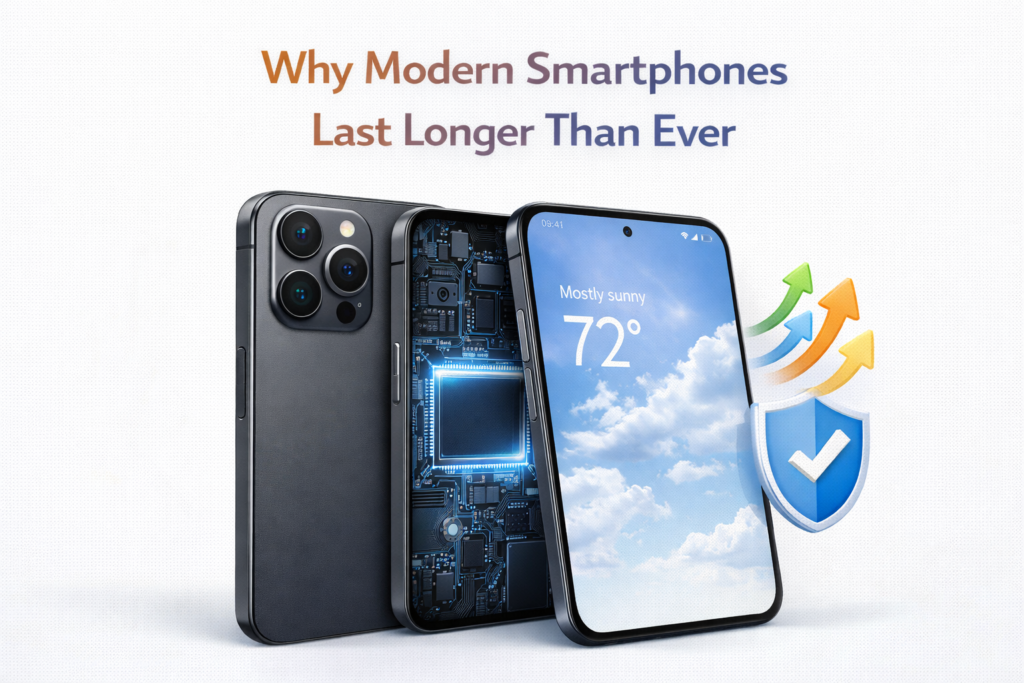
The Evolution of Smartphone Lifespan
In the early days of smartphones, rapid innovation meant that devices became outdated quickly.
Older phones often struggled with:
- Slow processors
- Limited storage
- Poor battery performance
- Short software support cycles
This led many people to upgrade frequently.
However, as smartphone technology matured, manufacturers shifted their focus toward performance efficiency, durability, and long-term usability.
Today’s smartphones are significantly more powerful and optimized, allowing them to remain useful for much longer periods.
Powerful Processors That Age Better
One of the biggest reasons smartphones now last longer is the improvement in mobile processors.
Modern smartphone chips are designed not only for speed but also for efficiency and longevity.
What Makes New Processors Better
Current processors offer:
- Higher processing power
- Improved energy efficiency
- Advanced AI capabilities
- Better thermal management
Because these chips are so powerful, they continue to perform well even several years after release.
Real-Life Example
A smartphone released today may have enough performance to handle demanding apps and games for many years without slowing down significantly.
Longer Software Support From Manufacturers
Another major factor contributing to longer smartphone lifespans is extended software support.
Many manufacturers now provide updates for several years after a device is released.
Why Software Updates Matter
Updates provide:
- Security patches
- Bug fixes
- Performance improvements
- New features
This means users can continue using their phones safely and efficiently for longer periods.
Real-Life Example
Some smartphone brands now offer five or more years of software updates, ensuring devices remain secure and compatible with modern apps.
Better Battery Technology
Battery life has always been one of the most important aspects of smartphone usability.
While battery chemistry has improved gradually, the biggest changes have come from better battery management systems.
Smarter Battery Optimization
Modern phones use intelligent software to optimize how batteries charge and discharge.
This helps:
- Reduce battery wear
- Extend battery lifespan
- Improve daily battery performance
Real-Life Example
Features such as adaptive charging slow down charging overnight to reduce long-term battery damage.
More Durable Materials and Build Quality
Smartphones are now built using stronger materials than earlier generations.
Manufacturers invest heavily in improving durability because users expect their devices to survive everyday use.
Common Durability Improvements
Many modern smartphones include:
- Scratch-resistant glass
- Water resistance
- Dust protection
- Reinforced frames
These features help protect devices from accidental damage.
Storage Capacity Has Increased
Earlier smartphones often had limited storage, which caused devices to slow down over time.
Today, even mid-range smartphones offer much larger storage capacities.
Why More Storage Matters
More storage allows users to:
- Install more apps
- Store more photos and videos
- Avoid performance slowdowns caused by full storage
With larger storage options, smartphones remain usable for longer periods.
Improved Software Optimization
Modern operating systems are designed to run efficiently across different hardware generations.
Developers optimize apps and software to ensure compatibility with older devices.
Why This Helps
Better optimization ensures:
- Smooth performance
- Reduced system lag
- Efficient resource usage
This means older devices can still perform well even after several years of use.
Smartphone Innovation Has Slowed
In the early years of smartphones, each new generation brought dramatic improvements.
Today, innovation is more incremental.
Most new models offer:
- Slightly better cameras
- Faster processors
- Minor design updates
Because the differences between generations are smaller, many users feel comfortable keeping their phones longer.
How Users Can Extend Smartphone Lifespan
While manufacturers have improved durability, users can also take steps to make their devices last longer.
Use Protective Cases
Cases and screen protectors help prevent physical damage.
Keep Software Updated
Regular updates improve security and performance.
Avoid Extreme Temperatures
Excessive heat or cold can damage batteries and internal components.
Manage Storage
Deleting unused apps and files helps maintain performance.
Environmental Benefits of Longer Smartphone Lifespans
The shift toward longer-lasting smartphones also has environmental advantages.
Producing smartphones requires significant resources, including rare materials and energy.
When people keep their devices longer, it reduces:
- Electronic waste
- Manufacturing demand
- Environmental impact
Longer device lifespans support more sustainable technology consumption.
The Future of Long-Lasting Smartphones
Smartphone manufacturers continue working on technologies that improve longevity.
Future innovations may include:
- More durable materials
- Modular components for easier repair
- Even longer software support
- Advanced battery technologies
These improvements could allow smartphones to remain useful for many years.
Final Thoughts
Smartphones are lasting longer than ever because of major advancements in hardware, software, and design.
Powerful processors, extended software updates, improved battery management, and stronger materials all contribute to devices that remain reliable for years.
For users, this means better value and fewer upgrades. Instead of replacing phones frequently, many people can now enjoy the same device for much longer.
By taking care of your smartphone and keeping it updated, you can maximize its lifespan and continue enjoying its features for years to come.
Frequently Asked Questions
How long do modern smartphones typically last?
Many modern smartphones can last between four and six years with proper care and software support.
What causes smartphones to slow down over time?
Slowdowns can occur due to outdated software, limited storage, or aging batteries.
Can replacing a battery extend smartphone life?
Yes. Replacing an aging battery can significantly improve device performance and usability.
Are expensive smartphones more durable?
Higher-end smartphones often include stronger materials and longer software support, which may help them last longer.
Is it better to upgrade or repair an older phone?
If the phone still performs well, repairing components like the battery or screen can extend its lifespan.
SHARING IS CARING 💖