
Smartphones have transformed the way people communicate, work, and interact with the digital world. Over the past decade, mobile devices have evolved from simple communication tools into powerful personal computers that fit in our pockets.
As we move toward 2026, smartphone technology continues to advance rapidly. Manufacturers are experimenting with new designs, smarter artificial intelligence, improved cameras, and innovative display technologies.
These changes will shape how smartphones look and function in the coming years.
In this article, we’ll explore the biggest smartphone trends expected in 2026, what they could mean for everyday users, and how these innovations may redefine the mobile experience.
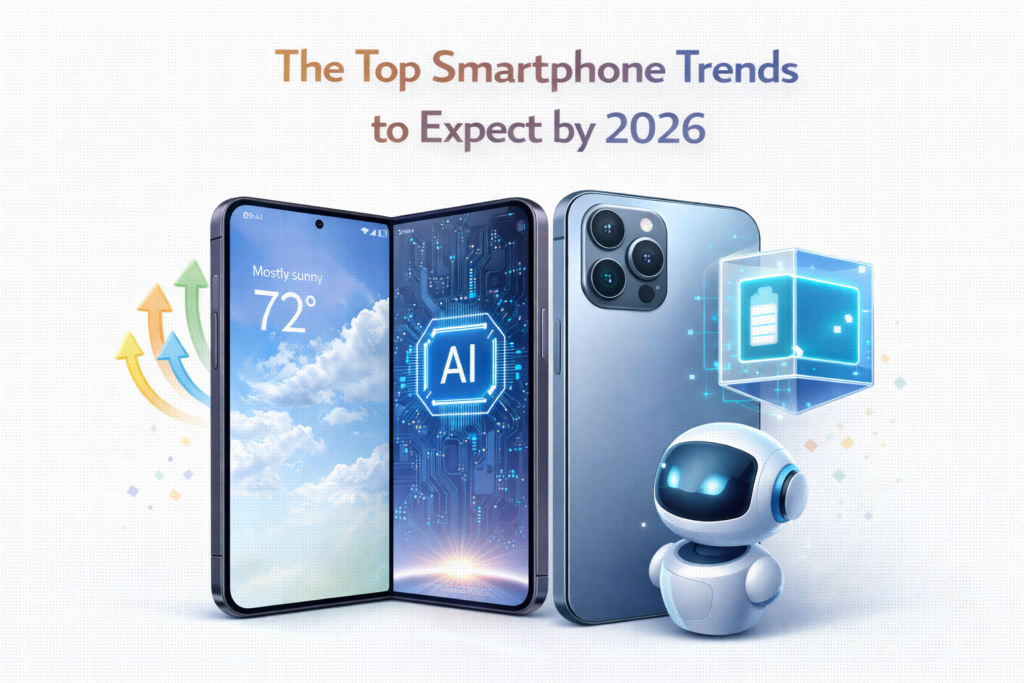
Why Smartphone Innovation Is Accelerating
The smartphone market has become one of the most competitive technology sectors. Companies constantly work to introduce new features that improve user experience and differentiate their devices.
Advancements in areas such as artificial intelligence, battery technology, and connectivity are driving this rapid progress.
Consumers also expect smartphones to do more than ever before, including tasks like:
- Professional-quality photography
- Advanced gaming
- Productivity tools
- Health tracking
- Smart home control
Because of these expectations, manufacturers continue pushing the boundaries of mobile technology.
1. AI-Powered Smartphones
Artificial intelligence is becoming one of the most important features in modern smartphones.
By 2026, AI is expected to play an even bigger role in how smartphones operate.
How AI Will Improve Smartphones
AI technology may help phones:
- Optimize battery usage
- Improve photography automatically
- Suggest useful actions based on habits
- Enhance voice assistants
Real-Life Example
Your phone could automatically adjust settings based on your daily routine, such as activating focus mode during work hours or adjusting brightness based on usage patterns.
AI-driven features will make smartphones more personalized and intuitive.
2. Foldable and Flexible Displays
Foldable smartphones have already begun appearing on the market, but the technology is expected to mature significantly by 2026.
Why Foldable Displays Matter
Flexible screens allow phones to transform into larger tablet-like devices.
Benefits include:
- Larger display area for multitasking
- Compact portability when folded
- Improved productivity tools
Future Possibilities
Manufacturers are also exploring rollable and expandable displays that could change screen sizes dynamically.
These innovations may create entirely new smartphone form factors.
3. Improved Battery Technology
Battery performance remains one of the most important factors for smartphone users.
In 2026, battery innovations could dramatically improve device endurance.
Potential Battery Advancements
New battery technologies may include:
- Faster charging speeds
- Longer-lasting battery materials
- Improved power efficiency
Real-Life Impact
Future smartphones may last multiple days on a single charge or recharge extremely quickly.
These improvements would reduce one of the most common frustrations users face today.
4. More Advanced Smartphone Cameras
Smartphone cameras have improved dramatically in recent years, and the trend will continue in 2026.
Manufacturers are focusing on both hardware improvements and AI-driven image processing.
Expected Camera Innovations
Future cameras may include:
- Improved low-light photography
- Advanced zoom capabilities
- AI-assisted editing tools
- Professional-grade video recording
Real-Life Example
Users may be able to capture photos that rival professional cameras, making smartphones even more powerful creative tools.
5. Faster Connectivity With Next-Generation Networks
Connectivity is another area expected to evolve rapidly.
By 2026, next-generation mobile networks will enable faster data speeds and more reliable connections.
What Faster Connectivity Means
Improved network speeds can support:
- High-quality video streaming
- Cloud gaming
- Real-time collaboration tools
- Enhanced augmented reality experiences
These improvements will allow smartphones to handle even more advanced applications.
6. Enhanced Security and Privacy Features
As smartphones store increasing amounts of personal information, security and privacy are becoming more important.
Manufacturers are expected to introduce more advanced protection features.
Future Security Improvements
These may include:
- More accurate biometric authentication
- On-device AI security monitoring
- Stronger encryption technologies
Such features help ensure personal data remains protected.
7. Sustainable Smartphone Design
Environmental concerns are influencing how technology companies design new devices.
By 2026, more smartphones may be produced using sustainable materials and eco-friendly manufacturing processes.
Why Sustainability Matters
Reducing electronic waste and energy consumption is becoming a priority for many companies.
Future devices may feature:
- Recyclable materials
- Modular components for easier repairs
- Longer software support cycles
These changes could help extend device lifespans and reduce environmental impact.
8. Augmented Reality Integration
Augmented reality (AR) technology blends digital content with the real world.
Smartphones may increasingly use AR for everyday applications.
Possible AR Uses
Augmented reality could help users:
- Visualize furniture in their homes before buying
- Navigate cities with interactive directions
- Learn through immersive educational experiences
These capabilities could make smartphones powerful tools for both productivity and entertainment.
9. Smarter Integration With Other Devices
Smartphones are becoming central hubs for connected devices.
By 2026, phones may integrate more seamlessly with:
- Smart home systems
- Wearable devices
- Personal computers
- Connected vehicles
This interconnected ecosystem allows users to control multiple devices from a single interface.
Tips for Choosing a Future-Ready Smartphone
If you plan to buy a smartphone soon, considering future trends can help you make a better decision.
Look for Long Software Support
Devices that receive longer updates remain useful for more years.
Prioritize Battery Performance
Battery life remains a key factor in everyday usability.
Consider Ecosystem Compatibility
Phones that integrate well with other devices can improve productivity and convenience.
Final Thoughts
The smartphone industry continues evolving rapidly, with exciting innovations expected in the coming years.
From AI-powered features and foldable displays to advanced cameras and faster connectivity, smartphones in 2026 will likely offer capabilities that were once considered futuristic.
These developments will not only improve performance but also reshape how people interact with technology in everyday life.
As smartphones continue to evolve, users can look forward to devices that are smarter, more powerful, and better suited to modern digital lifestyles.
Frequently Asked Questions
What major smartphone trend is expected by 2026?
Artificial intelligence integration is expected to become one of the most significant smartphone trends.
Will foldable phones become more common?
Yes. As display technology improves, foldable smartphones are likely to become more widely adopted.
Will smartphone batteries improve in the future?
Battery technologies are expected to improve with faster charging and longer lifespan.
How will AI affect smartphone usage?
AI can help optimize performance, improve photography, and personalize user experiences.
Are smartphones becoming more environmentally friendly?
Many manufacturers are working toward sustainable materials and longer device lifespans.
SHARING IS CARING 💖