
In today’s connected world, Wi-Fi has become the default way most people access the internet. From smartphones and laptops to smart TVs and gaming consoles, wireless connectivity makes it easy to go online without worrying about cables. But while Wi-Fi is convenient, it isn’t always the best option when it comes to speed, reliability, security, and overall performance.
This is where Ethernet comes in. Even though it may seem like an old-school technology, Ethernet still provides one of the most stable and powerful ways to connect to the internet. Whether you’re working from home, gaming online, or streaming high-resolution videos, a wired connection can make a noticeable difference.
In this article, we explore why using Ethernet instead of Wi-Fi can significantly improve your internet experience, along with real-life examples and practical situations where switching to a wired connection makes sense.
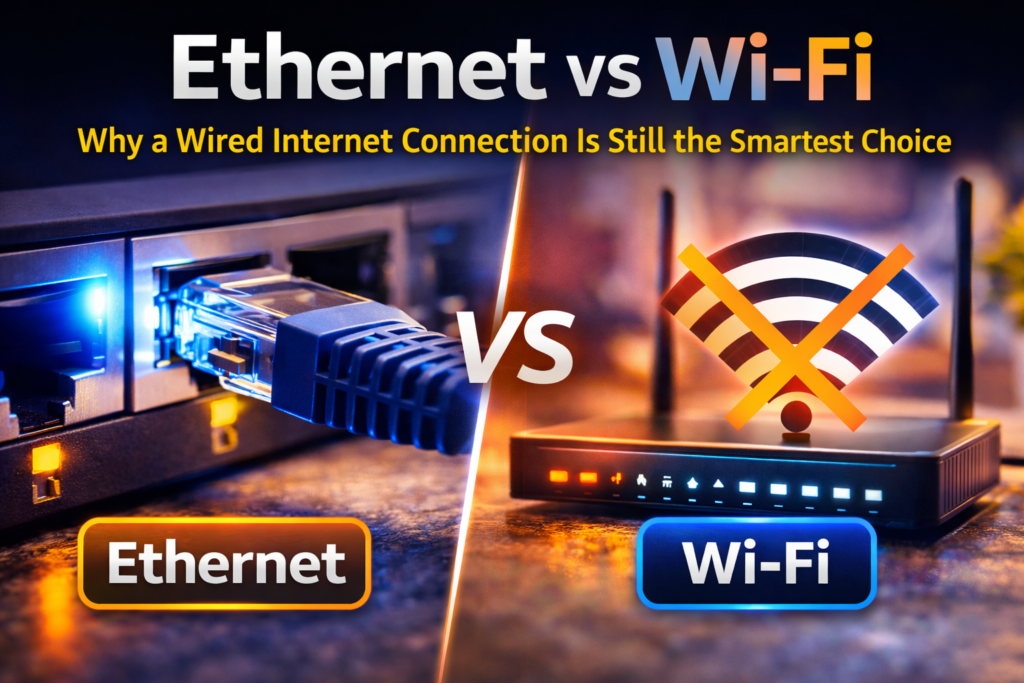
Understanding Ethernet and Wi-Fi
Before comparing the two, it helps to understand what they actually are.
What Is Ethernet?
Ethernet is a wired networking technology that connects devices to a router or modem using a physical cable. These cables transfer data directly between devices, providing a fast and stable connection.
Ethernet is commonly used in:
- Offices
- Data centers
- Gaming setups
- Desktop computers
Because the connection is physical, data travels more consistently and with less interference.
What Is Wi-Fi?
Wi-Fi is a wireless networking technology that allows devices to connect to the internet without cables. It uses radio signals transmitted from a router.
Wi-Fi is extremely convenient and works well for:
- Smartphones
- Tablets
- Smart home devices
- Laptops used around the house
However, because it relies on wireless signals, it can be affected by distance, walls, interference, and network congestion.
1. Ethernet Provides Faster Internet Speeds
One of the biggest advantages of Ethernet is speed consistency.
While modern Wi-Fi standards can support high speeds, the actual performance often drops depending on your environment.
With Ethernet:
- Data travels directly through the cable
- There is minimal signal interference
- Speed remains stable over time
For example, if your internet plan provides 500 Mbps, Wi-Fi might deliver only 250–350 Mbps depending on distance and interference. Ethernet, however, can often deliver the full speed your internet provider offers.
This makes Ethernet ideal for users who want maximum performance from their internet connection.
2. More Stable and Reliable Connection
Anyone who has used Wi-Fi long enough has experienced moments when the internet suddenly slows down or disconnects.
This happens because Wi-Fi signals can be affected by:
- Walls and floors
- Other wireless devices
- Microwave ovens
- Bluetooth signals
- Neighboring networks
Ethernet eliminates most of these issues.
Because the connection is wired, the signal does not fluctuate. This results in a more reliable and predictable internet connection.
For people who rely on stable connectivity—such as remote workers or online students—this reliability can make a big difference.
3. Lower Latency for Gaming and Video Calls
Latency refers to the delay between sending and receiving data over the internet.
Lower latency means faster response times, which is extremely important for:
- Online gaming
- Video conferencing
- Live streaming
- Remote desktop work
Wi-Fi connections often introduce additional delay because wireless signals must travel through the air and compete with other signals.
Ethernet significantly reduces latency, allowing data to move more efficiently between your device and the network.
For gamers, this can mean:
- Faster reaction times
- Fewer lag spikes
- A smoother multiplayer experience
Many professional gamers prefer Ethernet connections for this reason.
4. Better Security
Security is another area where Ethernet has an advantage.
Wi-Fi networks broadcast signals that can potentially be accessed by unauthorized users if the network is not properly secured.
While modern encryption standards help protect Wi-Fi networks, they still rely on wireless transmission.
Ethernet connections are inherently more secure because:
- The connection requires physical access
- Data is transmitted through cables rather than open air
- It is harder for outsiders to intercept traffic
For businesses and organizations that handle sensitive data, Ethernet remains the preferred networking option.
5. Ideal for Smart Home Hubs and Streaming Devices
Many households now use multiple smart devices connected to the internet.
These include:
- Smart TVs
- Streaming boxes
- Gaming consoles
- Network storage devices
Devices that remain in a fixed location often benefit from Ethernet connections.
For example, a smart TV connected via Ethernet can:
- Stream 4K videos more smoothly
- Avoid buffering during movies
- Maintain stable connections to streaming services
Using Ethernet for stationary devices can also reduce congestion on your Wi-Fi network.
6. Consistent Performance in Busy Networks
In homes where many devices are connected to Wi-Fi, network congestion can become a problem.
Consider a typical household where several people are:
- Streaming videos
- Attending online classes
- Playing online games
- Downloading large files
Wi-Fi bandwidth must be shared among all these devices.
Ethernet helps solve this problem by allowing certain devices to use a dedicated wired connection, reducing the load on the wireless network.
This improves performance for everyone in the house.
7. Perfect for Work-From-Home Setups
Remote work has become more common, and reliable internet connectivity is now essential.
Many work tasks depend on stable connections, including:
- Video meetings
- Cloud file transfers
- Remote collaboration tools
- Virtual desktops
Wi-Fi interruptions during a meeting or file upload can be frustrating.
Ethernet ensures a stable connection throughout the workday, helping professionals stay productive.
8. Easier Troubleshooting
Network problems can sometimes be difficult to diagnose, especially when multiple devices rely on Wi-Fi.
Ethernet connections are simpler to troubleshoot because:
- The connection path is direct
- Fewer external factors affect performance
- Network stability is easier to test
If a wired device experiences slow internet, the issue is often related to the router or service provider rather than wireless interference.
9. Ethernet Is Still Improving
Some people assume Ethernet is outdated, but the technology continues to evolve.
Modern Ethernet standards support extremely fast speeds, including:
- Gigabit Ethernet (1 Gbps)
- 2.5 Gigabit Ethernet
- 10 Gigabit Ethernet
These speeds are far beyond what most home internet connections currently provide.
As internet speeds continue increasing, Ethernet will remain an important technology for high-performance networking.
When Wi-Fi Still Makes Sense
Despite its advantages, Ethernet cannot completely replace Wi-Fi.
Wireless networking remains essential for devices that need mobility, such as:
- Smartphones
- Tablets
- Laptops used throughout the house
- Smart home sensors
In most homes, the best setup combines Ethernet for stationary devices and Wi-Fi for portable devices.
This balanced approach provides both convenience and performance.
Simple Tips for Using Ethernet at Home
If you want to improve your home network, consider these practical tips:
Connect High-Demand Devices With Ethernet
Use wired connections for devices that consume the most bandwidth.
Use Quality Ethernet Cables
Modern Cat6 or Cat6a cables support faster speeds and better reliability.
Place Your Router Strategically
Even when using Ethernet, a well-placed router helps optimize the network.
Reduce Wi-Fi Congestion
Move devices like gaming consoles or smart TVs to wired connections when possible.
Final Thoughts
Wi-Fi has transformed the way we connect to the internet, offering unmatched convenience and mobility. However, Ethernet remains the superior choice when performance, reliability, and security matter most.
From faster speeds and lower latency to improved stability and better security, wired connections provide advantages that wireless networks simply cannot always match.
For gamers, remote workers, and anyone who depends on a stable internet connection, switching key devices to Ethernet can dramatically improve the online experience.
Instead of thinking of Ethernet as outdated technology, it’s better to see it as a powerful foundation for a modern home network.
By combining Ethernet for performance-critical devices and Wi-Fi for mobility, you can create a network that delivers the best of both worlds.
SHARING IS CARING 💖